Does getting the correct Shoei motorcycle helmet size seem confusing? Yes, it can be! A proper fitting helmet is key for both safety and comfort on the road. This comprehensive guide will walk you through everything you need to know to find your perfect Shoei helmet size. We’ll cover measuring your head, understanding Shoei’s size chart, and ensuring the right fit.
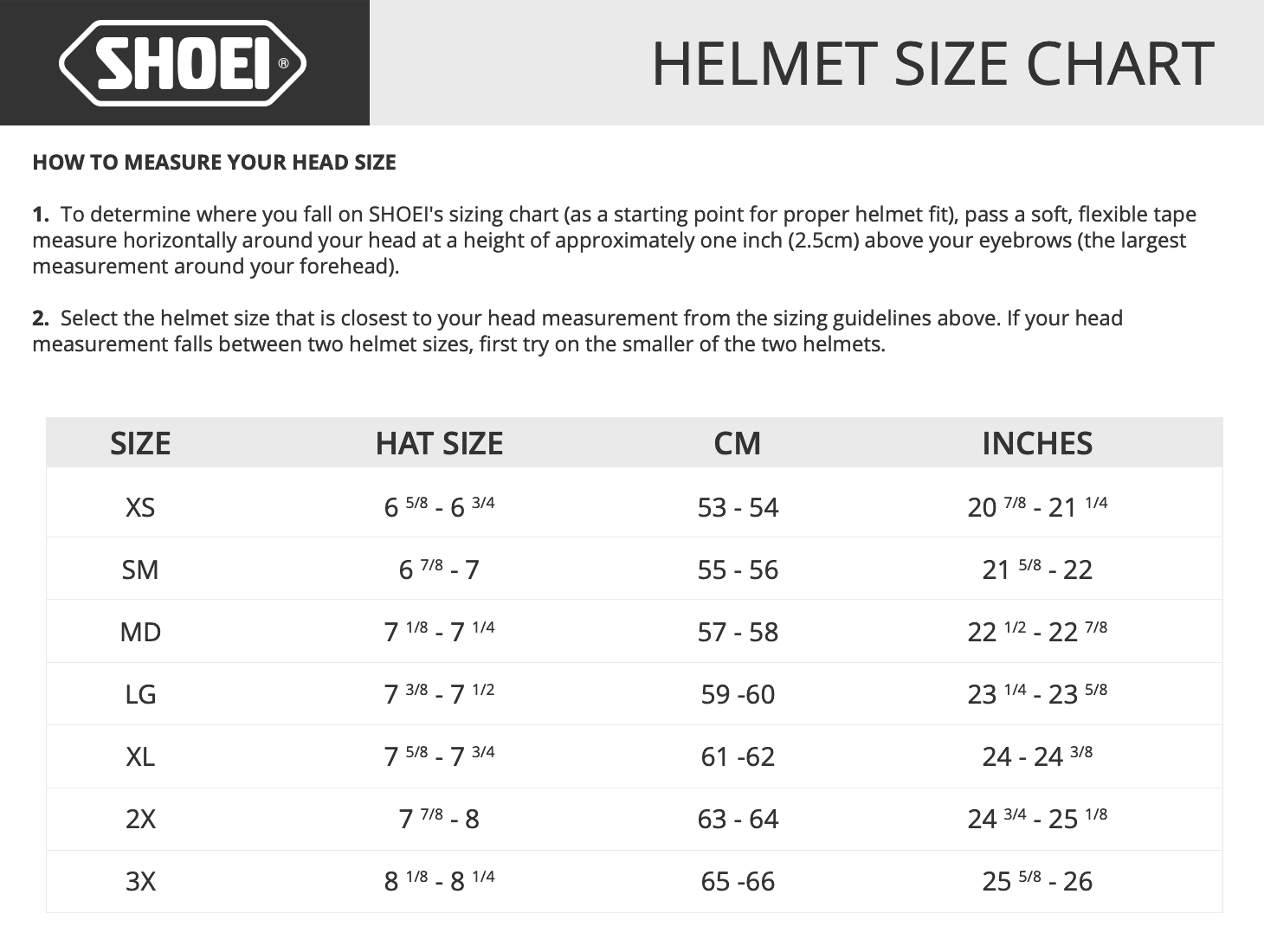
Image Source: shoei-helmets.com
Why Helmet Size Matters
A motorcycle helmet’s primary function is to protect your head in case of an accident. A helmet that’s too big can move around during a crash, reducing its effectiveness. A helmet that’s too small can cause discomfort and pressure points, distracting you while riding. A properly fitted helmet will:
- Provide optimal impact protection.
- Stay securely in place during a crash.
- Minimize wind noise and buffeting.
- Maximize comfort for long rides.
Measuring Your Head for a Shoei Helmet
The first step in finding your ideal Shoei helmet size is to accurately measure your head. Here’s a step-by-step guide:
-
Gather Your Supplies: You’ll need a flexible measuring tape (cloth or plastic), a mirror, and a friend can be helpful for assistance.
-
Position the Measuring Tape: Wrap the measuring tape around your head, starting about one inch (2.5 cm) above your eyebrows and ears. This is the widest part of your head.
-
Keep the Tape Level: Ensure the measuring tape is level around your entire head. Use a mirror or ask a friend to check the positioning.
-
Get the Measurement: Pull the tape snugly, but not too tight. Read the measurement in centimeters (cm) or inches. This is your head circumference. It’s essential for determine Shoei helmet size.
-
Repeat for Accuracy: Measure your head two or three times to ensure you get a consistent measurement. Use the largest measurement.
Decoding the Shoei Helmet Size Chart
Now that you have your head measurement, it’s time to compare it to the Shoei helmet size chart. Keep in mind that Shoei sizes can vary slightly depending on the specific helmet model. Therefore, always consult the size chart specific to the model you are interested in. The motorcycle helmet size chart Shoei provides is a crucial tool.
Here’s a general Shoei helmet size chart as a reference. However, always refer to the specific chart for the helmet model you are considering purchasing:
| Helmet Size | Head Circumference (cm) | Head Circumference (inches) |
|---|---|---|
| XXS | 51-52 | 20 1/8 – 20 1/2 |
| XS | 53-54 | 20 7/8 – 21 1/4 |
| S | 55-56 | 21 5/8 – 22 |
| M | 57-58 | 22 1/2 – 22 7/8 |
| L | 59-60 | 23 1/4 – 23 5/8 |
| XL | 61-62 | 24 – 24 3/8 |
| XXL | 63-64 | 24 3/4 – 25 1/4 |
| XXXL | 65-66 | 25 5/8 – 26 |
Important Note: This chart is a guideline. Always check the specific Shoei helmet sizing guide for the model you are interested in purchasing.
Shoei Helmet Size Chart cm
The Shoei helmet size chart cm is the standard unit of measurement. Ensure you take your head measurement in centimeters for the most accurate result.
Shoei Helmet Size Comparison
Keep in mind that Shoei helmet size comparison with other brands isn’t always straightforward. Sizes can vary between manufacturers. Always rely on the Shoei-specific size chart and fitment guide, rather than assuming your size from another brand will be the same.
Evaluating the Shoei Helmet Fit
Once you receive your helmet, it’s important to check the fit. A helmet should feel snug but not uncomfortably tight. Here are some tests to perform:
-
The Forehead Test: With the helmet on, try to slide your fingers between your forehead and the helmet’s EPS liner. If you can easily fit more than one finger, the helmet is likely too big.
-
The Cheek Pad Test: The cheek pads should make contact with your cheeks. They should be snug, but not so tight that they cause discomfort or restrict your ability to talk.
-
The Roll-Off Test: Buckle the chin strap and tighten it properly. Try to roll the helmet off your head by pulling it from the back. If the helmet rolls off, it’s too big.
-
The Movement Test: While wearing the helmet and with the chin strap buckled, try to move the helmet from side to side and up and down. The helmet should move your head and skin together. If the helmet moves independently of your head, it’s too large.
-
The Pressure Point Test: Wear the helmet for at least 15-20 minutes. Check for any pressure points or areas of discomfort. Pressure points can become unbearable on long rides.
Shoei Helmet Fitment Guide
Shoei helmet fitment guide emphasizes the importance of a snug, comfortable fit. The helmet should sit level on your head, with the front edge about one inch above your eyebrows. The chin strap should be snug against your throat, allowing you to breathe and speak comfortably. Finding your Shoei helmet size takes time and patience.
Fine-Tuning the Fit
Shoei helmets often come with adjustable cheek pads and liners, allowing you to customize the fit. Here’s how to adjust the fit:
-
Cheek Pads: Shoei offers different thickness cheek pads that can be purchased separately. If your cheek pads are too tight, you can replace them with thinner ones. If they are too loose, you can replace them with thicker ones.
-
Crown Liner: Similar to cheek pads, Shoei provides a variety of crown liners. If your helmet feels too tight on the top of your head, you can swap out the liner for a thinner option.
-
Chin Strap Adjustment: The chin strap should be adjusted so that it’s snug against your throat. There should be no slack in the strap. The strap should be centered and comfortable.
Shoei Helmet Sizing Instructions
Following Shoei helmet sizing instructions ensures a correct and safe fit. Here’s a summary of the key steps:
- Measure your head circumference accurately.
- Consult the Shoei helmet size chart for the specific model.
- Try on the helmet and check for a snug, comfortable fit.
- Perform the forehead, cheek pad, roll-off, movement, and pressure point tests.
- Adjust the cheek pads and liners as needed.
- Ensure the chin strap is properly adjusted.
- If you’re unsure about the fit, consult a professional helmet fitter.
Shoei Helmet Size Recommendations
Shoei helmet size recommendations are based on head circumference, but also consider head shape. Some people have more oval-shaped heads, while others have more round-shaped heads. If you find that a particular Shoei helmet model doesn’t fit well, it may be due to your head shape. In this case, try a different Shoei model or another brand that caters to your head shape.
Common Mistakes to Avoid
- Guessing Your Size: Never assume your helmet size based on previous helmets or other brands. Always measure your head and consult the Shoei size chart.
- Ignoring Pressure Points: Don’t ignore pressure points, even if they seem minor at first. They can become painful on long rides.
- Compromising on Fit: Don’t settle for a helmet that’s “close enough.” A properly fitted helmet is essential for safety and comfort.
- Not Trying Before Buying: Whenever possible, try on the helmet before you buy it. This allows you to check the fit and ensure comfort.
- Buying Used Helmets: Avoid buying used helmets, as they may have been damaged in a crash and their protective capabilities may be compromised.
What to Do If You’re Between Sizes
If your head measurement falls between two sizes on the Shoei helmet size chart, it’s generally recommended to choose the smaller size. This is because the helmet’s liner will compress over time, and a slightly snug fit will become more comfortable. You can always adjust the cheek pads and liners to fine-tune the fit.
The Importance of Professional Fitting
If you’re unsure about finding your Shoei helmet size or evaluating the fit, consider getting a professional helmet fitting. Many motorcycle dealerships and specialty stores offer this service. A professional fitter can accurately measure your head, assess your head shape, and recommend the best Shoei helmet model and size for you. They can also help you adjust the helmet for optimal comfort and protection.
Fathoming Shoei Helmet Care
Proper helmet care can extend the life of your Shoei helmet and maintain its protective capabilities. Here are some tips:
- Cleaning: Clean the helmet’s exterior with a mild soap and water solution. Avoid using harsh chemicals or solvents, as they can damage the shell.
- Liner Maintenance: Removable helmet liners can be hand-washed with mild soap and water. Allow them to air dry completely before reinstalling them in the helmet.
- Storage: Store your helmet in a cool, dry place away from direct sunlight and extreme temperatures.
- Inspection: Regularly inspect your helmet for any signs of damage, such as cracks, dents, or loose parts. If you notice any damage, replace the helmet immediately.
- Replacement: Shoei recommends replacing your helmet every 3-5 years, depending on usage and condition. Even if the helmet appears to be in good condition, the EPS liner can degrade over time, reducing its effectiveness.
Frequently Asked Questions (FAQ)
Q: What is the best way to measure my head for a Shoei helmet?
A: Use a flexible measuring tape to measure the circumference of your head, about one inch above your eyebrows and ears. Keep the tape level and pull it snugly, but not too tight.
Q: Can I use my hat size to determine my Shoei helmet size?
A: No, hat sizes are not accurate indicators of helmet size. Always measure your head circumference and consult the Shoei helmet size chart.
Q: Who is responsible if my Shoei helmet doesn’t fit properly after purchase?
A: The responsibility for proper fit typically lies with the purchaser. That’s why trying on the helmet or getting a professional fitting is crucial. However, if the helmet is clearly mislabeled or defective, you may have grounds for a return or exchange. Always review the retailer’s return policy before purchasing.
Q: What if I wear glasses?
A: When trying on a helmet, wear your glasses to ensure they fit comfortably and don’t cause any pressure points. Some Shoei helmets are designed with eyeglass compatibility in mind.
Q: Can I modify my Shoei helmet for a better fit?
A: It’s generally not recommended to modify your helmet, as this can compromise its protective capabilities. Instead, try adjusting the cheek pads and liners or consult a professional helmet fitter.
Q: How often should I replace my Shoei helmet?
A: Shoei recommends replacing your helmet every 3-5 years, depending on usage and condition.
Unlocking your ultimate riding adventure hinges on finding that ideal Shoei helmet fit; this detailed guide is your key to a secure, blissful, and exhilarating journey on two wheels. Never forget, a perfectly snug helmet isn’t just a safety essential, it’s the bedrock of comfort, so don’t settle for anything less. Ride smart and ride safe!

Hi, I’m Hector Quintanilla, the creator of helmetslab.com.. As a passionate enthusiast and experienced expert in helmets, I’ve dedicated this platform to sharing my insights, knowledge, and hands-on experiences. Whether you’re seeking the best helmet for safety, comfort, or performance, my goal is to guide you with detailed reviews, tips, and advice. Ride safe, and let’s explore the world of helmets together!