The question of which offers better protection—a football helmet or a motorcycle helmet—is directly answered: A motorcycle helmet offers significantly better protection in the event of a high-speed crash due to its design, materials, and testing standards that are geared toward the higher impact forces and specific injury types encountered in motorcycle accidents. While a football helmet is designed for repeated impacts over a shorter duration, it does not provide the same level of protection against the severe head trauma possible in a motorcycle accident. This article will explore the impact protection comparison between the two, including helmet certification standards, helmet materials difference, football helmet design motorcycle, and more.
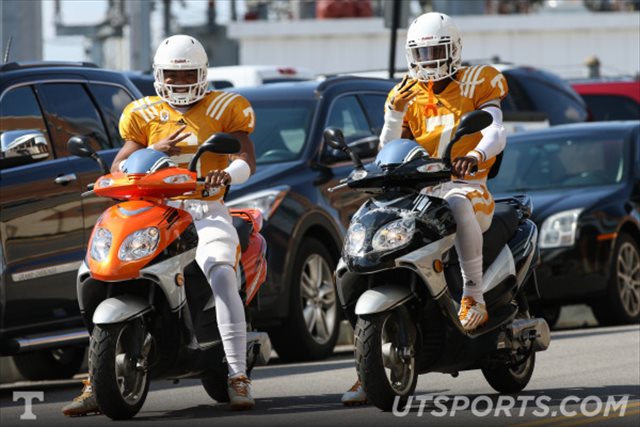
Image Source: www.cbssports.com
Examining Helmet Safety for Football and Motorcycling
Helmets are essential safety gear in many sports and activities, including football and motorcycling. While both types of helmets aim to protect the head, their designs, construction, and testing standards differ significantly. These variations reflect the distinct types of impacts and potential injuries associated with each activity. This section offers a broad overview of the safety aspects of both helmets.
Football Helmet Safety Motorcycle: Understanding the Design Intent
Football helmets are engineered to mitigate the risk of skull fractures and concussions resulting from repeated, moderate-force impacts during gameplay. These impacts often involve collisions with other players or the ground. Therefore, football helmet design prioritizes energy absorption over a series of hits.
Motorcycle Helmet Safety: Prioritizing High-Impact Protection
Motorcycle helmets, on the other hand, are designed to protect against a single, high-energy impact that can occur during a crash, often involving hitting the pavement or another vehicle at high speed. Motorcycle helmet features are focused on preventing severe traumatic brain injuries, skull fractures, and facial injuries.
An Impact Protection Comparison: Football Helmet vs. Motorcycle Helmet
The core function of any helmet is to protect the head from injury. However, the nature of impacts and the severity of potential injuries differ greatly between football and motorcycling.
Impact Scenarios: Gridiron vs. Road
- Football: Players experience repeated sub-concussive and concussive impacts. The helmet must absorb and distribute this energy to reduce the risk of head injury prevention.
- Motorcycling: Riders face the risk of a single, devastating impact. The helmet must withstand extreme forces and protect the head from penetration, rotational forces, and skull fractures.
Impact Absorption: Analyzing Helmet Construction
- Football Helmets: Typically use a combination of a hard outer shell (usually polycarbonate or ABS plastic) and internal padding (foam, air bladders, or a combination) to absorb impact energy. The padding compresses upon impact, dissipating energy and reducing the force transmitted to the head.
- Motorcycle Helmets: Typically feature a multi-layer construction. This includes a hard outer shell (fiberglass, carbon fiber, or polycarbonate), an energy-absorbing EPS (expanded polystyrene) liner, and a comfort liner. The EPS liner is designed to crush upon impact, absorbing the majority of the energy. Some helmets also incorporate additional layers or features to mitigate rotational forces.
Comparative Table: Impact Protection Features
| Feature | Football Helmet | Motorcycle Helmet |
|---|---|---|
| Impact Type | Repeated, moderate-force impacts | Single, high-energy impact |
| Outer Shell | Polycarbonate or ABS plastic | Fiberglass, carbon fiber, or polycarbonate |
| Energy Absorption | Foam, air bladders | EPS liner |
| Rotational Impact | Some models with rotational impact reduction technology | Many models with rotational impact reduction systems (MIPS, etc.) |
| Coverage | Primarily covers the top and sides of the head | Full coverage of the head, face, and neck (in full-face models) |
Helmet Certification Standards: DOT vs NOCSAE Standards
The difference in safety standards is a key factor when evaluating helmet protection. The standards governing football and motorcycle helmets reflect the specific risks associated with each activity.
DOT vs NOCSAE: Different Testing Protocols
- DOT (Department of Transportation): The DOT standard is the minimum safety standard for motorcycle helmets in the United States. It tests for impact attenuation, penetration resistance, and retention system integrity. The testing involves dropping the helmet onto a flat anvil and a hemispherical anvil at specific speeds.
- NOCSAE (National Operating Committee on Standards for Athletic Equipment): NOCSAE is the standard for football helmets. It focuses on reducing the risk of skull fractures and, more recently, concussions. NOCSAE testing involves impacting the helmet at various locations and measuring the force transmitted to the head.
Certification Focus: Activity-Specific Requirements
The DOT standard emphasizes the ability of a motorcycle helmet to withstand a single, high-impact event, while the NOCSAE standard for football helmets focuses on mitigating the risk of injury from repeated impacts. This is why relying on a football helmet for street bike riding would be a critical mistake.
Additional Certifications
- Snell: The Snell Memorial Foundation is a non-profit organization that provides independent testing and certification for both motorcycle and other types of helmets. Snell standards are generally more rigorous than DOT standards.
- ECE (Economic Commission for Europe): ECE 22.05 (or the newer ECE 22.06) is a widely accepted standard for motorcycle helmets in Europe and other parts of the world. ECE standards are considered to be more comprehensive than DOT standards.
Helmet Materials Difference: Construction and Composition
The materials used in the construction of football and motorcycle helmets significantly affect their ability to protect the head. The material needs to be flexible enough to withstand multiple impacts.
Outer Shell Materials: Comparing Durability
- Football Helmets: Typically use polycarbonate or ABS plastic for the outer shell. These materials offer good impact resistance and durability for the types of impacts experienced in football.
- Motorcycle Helmets: Often use fiberglass, carbon fiber, or advanced composite materials. These materials provide superior strength and impact resistance compared to polycarbonate or ABS plastic. High-end motorcycle helmets may use a combination of materials to optimize weight, strength, and impact absorption.
Inner Liner Materials: Energy Absorption
- Football Helmets: Use foam padding, air bladders, or a combination of both for energy absorption. The padding compresses upon impact to dissipate energy.
- Motorcycle Helmets: Use EPS (expanded polystyrene) foam as the primary energy-absorbing liner. EPS foam is designed to crush upon impact, absorbing the majority of the energy and reducing the force transmitted to the head.
Retention Systems: Securing the Helmet
Both football and motorcycle helmets use retention systems to keep the helmet securely on the head during an impact. However, motorcycle helmet retention systems are generally more robust due to the higher forces involved in motorcycle accidents.
- Football Helmets: Typically use a chin strap with a snap or buckle closure.
- Motorcycle Helmets: Use a double D-ring closure system or a quick-release buckle. The double D-ring closure is considered to be the most secure type of retention system.
Football Helmet Design Motorcycle: Form Follows Function
While both types of helmets aim to protect the head, their designs are tailored to the specific needs of each activity.
Football Helmet Design: Balancing Protection and Visibility
Football helmets prioritize protection from impacts while also allowing for good visibility and communication. They often feature a face mask to protect the face from impacts.
Motorcycle Helmet Design: Aerodynamics and Coverage
Motorcycle helmets prioritize aerodynamics, coverage, and protection from the elements. Full-face motorcycle helmets offer the most comprehensive protection, covering the entire head, face, and neck. Open-face helmets offer less protection but provide more ventilation.
Comparing Coverage Areas
- Football Helmets: Primarily cover the top and sides of the head, leaving the face partially exposed (protected by a face mask).
- Motorcycle Helmets: Offer full coverage of the head, face, and neck (in full-face models). Open-face helmets leave the face exposed.
Motorcycle Helmet Features Football: What Can Be Borrowed?
Although a football helmet is not suitable for motorcycle riding, some features from motorcycle helmets could potentially improve football helmet safety.
Rotational Impact Reduction Technology
Many motorcycle helmets now incorporate rotational impact reduction systems such as MIPS (Multi-directional Impact Protection System) or similar technologies. These systems allow the helmet to rotate slightly during an impact, reducing the rotational forces transmitted to the brain. Integrating similar technology into football helmets could help reduce the risk of concussions.
Advanced Materials
Motorcycle helmets often use advanced materials such as carbon fiber and aramid fibers. These materials offer superior strength and impact resistance compared to the materials typically used in football helmets. Incorporating these materials into football helmets could improve their ability to absorb and distribute impact energy.
Enhanced Retention Systems
Motorcycle helmet retention systems, such as the double D-ring closure, are generally more secure than football helmet retention systems. Adopting more robust retention systems in football helmets could help ensure that the helmet stays securely on the head during an impact.
Helmet Testing Procedures: How Safety is Verified
Helmet testing is a critical part of ensuring that helmets meet safety standards. The testing procedures for football and motorcycle helmets differ significantly, reflecting the different types of impacts and potential injuries associated with each activity.
Football Helmet Testing: NOCSAE Standards
NOCSAE testing for football helmets involves impacting the helmet at various locations and measuring the force transmitted to the head. The tests are designed to assess the helmet’s ability to reduce the risk of skull fractures and concussions.
Motorcycle Helmet Testing: DOT, ECE, and Snell Standards
Motorcycle helmet testing involves dropping the helmet onto a flat anvil and a hemispherical anvil at specific speeds. The tests assess the helmet’s ability to withstand a single, high-impact event. Additional tests may include penetration resistance testing and retention system integrity testing.
Testing Parameters: Speed, Force, and Impact Location
The testing parameters for football and motorcycle helmets reflect the different types of impacts experienced in each activity. Motorcycle helmet testing typically involves higher impact speeds and forces than football helmet testing.
Recreational Sports Helmet Street Bike: A Word of Caution
It’s crucial to use the right type of helmet for the activity you’re participating in. Using a recreational sports helmet, such as a football helmet, for street bike riding is extremely dangerous and can result in severe injury or death.
The Importance of Using the Right Helmet
Motorcycle helmets are specifically designed and tested to protect against the types of impacts encountered in motorcycle accidents. They offer significantly more protection than recreational sports helmets.
Legal Requirements
Many jurisdictions have laws requiring motorcycle riders to wear DOT-approved helmets. Using a non-approved helmet can result in a fine or other penalties.
FAQ
Q: Can I use a football helmet for motorcycle riding?
A: No, you should never use a football helmet for motorcycle riding. Football helmets are not designed or tested to provide adequate protection in a motorcycle accident.
Q: What is the difference between DOT and NOCSAE standards?
A: DOT is the minimum safety standard for motorcycle helmets in the United States, while NOCSAE is the standard for football helmets. DOT focuses on a single, high-impact event, while NOCSAE focuses on mitigating the risk of injury from repeated impacts.
Q: Are more expensive motorcycle helmets safer than cheaper ones?
A: Generally, more expensive motorcycle helmets offer better protection due to the use of advanced materials, more sophisticated designs, and more rigorous testing. However, all DOT-approved helmets meet minimum safety standards.
Q: How often should I replace my motorcycle helmet?
A: It’s recommended to replace your motorcycle helmet every 3 to 5 years, or after any impact, even if there is no visible damage.
Q: What is MIPS in a motorcycle helmet?
A: MIPS (Multi-directional Impact Protection System) is a rotational impact reduction system that allows the helmet to rotate slightly during an impact, reducing the rotational forces transmitted to the brain.
Conclusion: Prioritizing Safety Through Specialized Design
To wrap things up, although football and motorcycle helmets both stand guard over our heads, their blueprints are crafted for wildly different collisions. Motorcycle helmets reign supreme in high-speed impacts, boasting a tougher build, rigorous testing, and all-around coverage that football gear simply can’t match. Ultimately, sporting the right helmet for the job is paramount to staying safe and dodging severe harm. So, always pick a helmet that’s up to snuff with safety regulations and hugs your head just right.

Hi, I’m Hector Quintanilla, the creator of helmetslab.com.. As a passionate enthusiast and experienced expert in helmets, I’ve dedicated this platform to sharing my insights, knowledge, and hands-on experiences. Whether you’re seeking the best helmet for safety, comfort, or performance, my goal is to guide you with detailed reviews, tips, and advice. Ride safe, and let’s explore the world of helmets together!